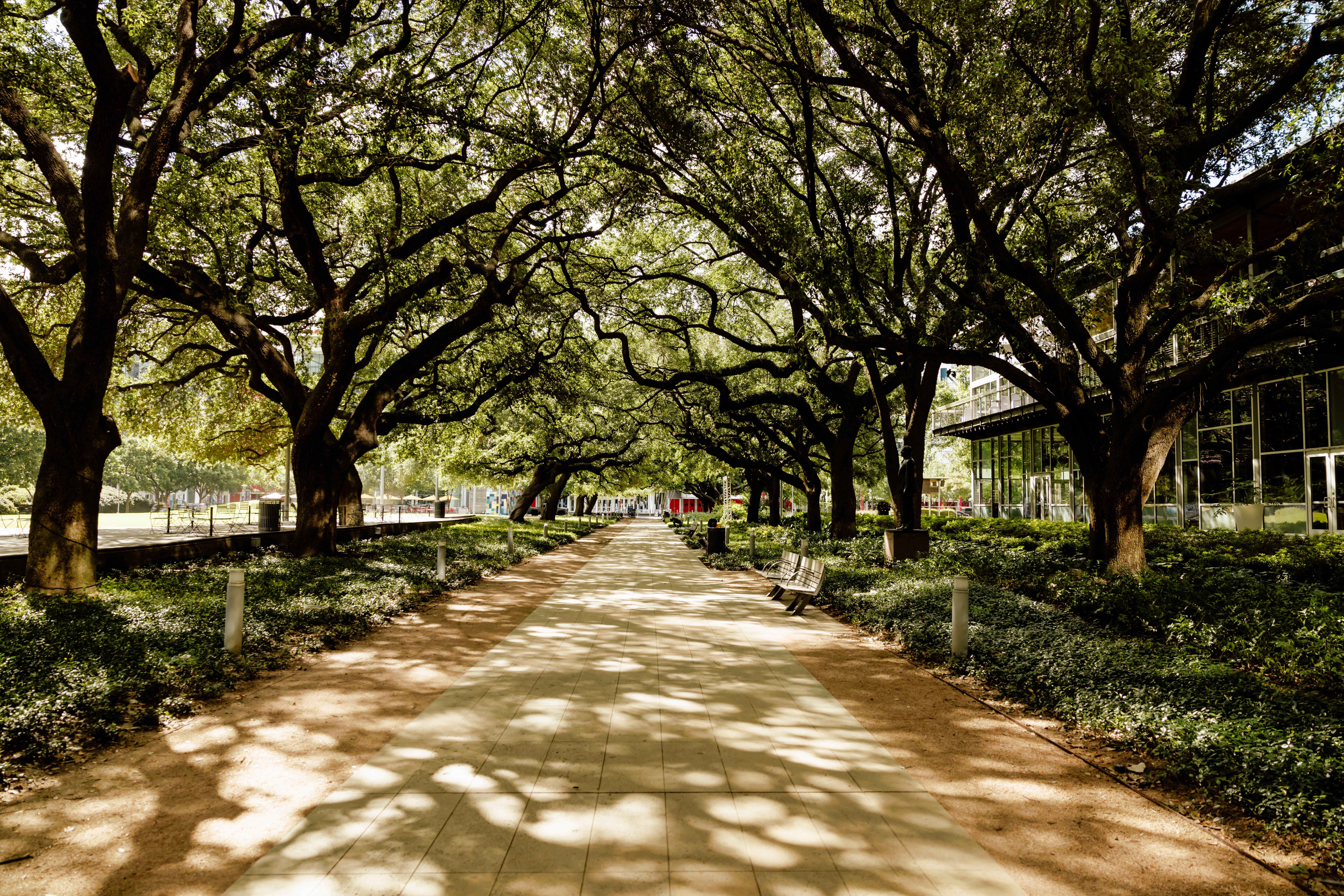








Looking at the 100-year-old live oaks along the Brown Promenade it’s easy to forget how barren downtown was before Discovery Green opened. When discussions for the park started in 2004the idea that families would ever bring their children to downtown to play was laughable.
Eighteen years and nearly 30 million visits later the results are clear: Discovery Green proved that greenspace attracts families, spurs economic growth and supports the civic and cultural life of a community. The lessons learned in the development of Discovery Green changed the way Houstonians think about investing in greenspace.
Discovery Green was a 12-acre pebble that started a wave of innovation across the city of Houston.
The secret to the park’s success is a foundation built on listening to Houstonians about their hopes for a public space. Discovery Green’s founders, including Maconda Brown O’Conner and the Brown Foundation, Nancy Kinder and the Kinder Foundation, the Wortham Foundation, Houston Endowment and the City of Houston under mayor Bill White, then created a vision for the next 100 years. Their plan laid out everything from maintenance to revenue and activation.
The lessons learned in Discovery Green helped shape Houston’s understanding of how a greenspace can transform a city and led to more innovation throughout Houston including development of Buffalo Bayou and Memorial Park and a transformative $100 million city bond referendum for Bayou Greenways that was matched by $120 million in private and non-city contributions.
The little-known history of Houston’s greenspaces is a fascinating chronicle of a century of big ideas, obstacles overcome and the little sparks along the way that have made life better for Houstonians.
Guy Hagstette, senior vice president of the Kinder Foundation and founding president of Discovery Green Conservancy, recently shared the remarkable story behind Houston’s park renaissance to the Houston Philosophical Society at Rice University.
Watch here for an inspiring look at what’s made possible and the work still yet to do:
Through your efforts Discovery Green can continue to provide a beautiful oasis in the heart of downtown Houston where memories are made.